Poker caribbean stud explained starts with a simple premise: you receive five cards, decide whether to fold or raise, and let the dealer reveal theirs against a fixed table rule. The game looks calm on the surface, but the decision tree is tighter than most players expect, and the house edge sits where the paytable rewards a royal flush far more than a straight. If you’re weighing an online session around Adelaide, the real question is whether the maths behind the raise matches the pace you want.
What the hand hierarchy actually rewards
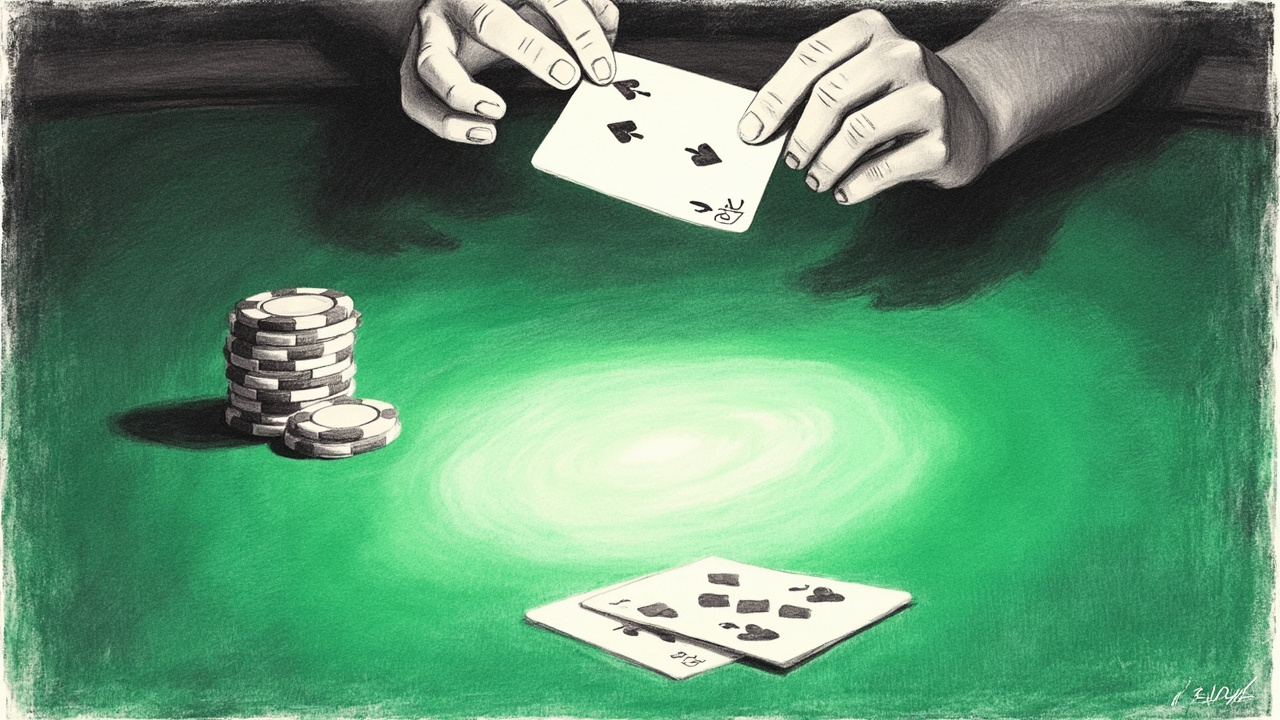
The paytable is the quiet engine of the game. A royal flush pays the top prize, a straight flush follows, and the lower tiers drop in a way that rarely compensates for the cost of a bad raise. In practice, that means the game rewards patience over aggression. You’re not bluffing the dealer; you’re reading a fixed distribution and deciding whether your five cards clear the raise threshold. The house edge usually lands somewhere in the mid-single digits, depending on the exact paytable, which is why two tables can feel like different games even when the rules are identical. When you’re playing late on a Tuesday arvo and the screen is quiet, that edge matters more than the flash of the graphics.
The dealer must qualify with an Ace-King or better to pay out on a raise, which is the rule that keeps the maths honest. If the dealer doesn’t qualify, you keep your original ante and the raise is pushed, but you still lose the ante on a fold. That qualification rule is the hinge: it means a weak hand isn’t automatically a disaster, but it also means a marginal raise can bleed slowly if you’re chasing a dealer that never shows up. The decision is less about guts and more about whether your five cards give you a realistic shot at a qualifying showdown.
For players who like to think in terms of expected value, the raise is the moment where the game stops being a card game and starts being a probability exercise. A pair or better is the practical line most regulars use, though the exact threshold shifts with the paytable and the size of the raise relative to the ante. You can spend an hour chasing suited connectors and feel busy as a one-armed bandit, but the long run belongs to hands that clear the qualification bar with enough frequency to justify the raise cost. That’s where the game’s design meets its math, and why a calm table often beats a noisy one.
If you want to see how a different table layout handles decision trees and bankroll pacing, a read through pai gow poker tips can sharpen the same kind of thinking about when to commit and when to step back.
How the raise decision changes the session
The raise is where most sessions are won or lost, and it’s also where the game’s rhythm shows up. A disciplined line – raise on a pair or better, fold on garbage – keeps variance manageable and stops a bad run from turning into a rushed one. The alternative is chasing every suited hand and hoping the dealer misses qualification often enough to soften the blow, which sounds clever until the paytable reminds you that top prizes are rare and marginal raises are expensive. The session length matters here: a short, focused block with a clear stop point usually outperforms a long grind where fatigue quietly rewrites your thresholds.
Bankroll control is the other side of the same coin. Staking a fixed amount per hand and treating the ante as the real cost keeps the maths visible, rather than letting a few big payouts distort what the session actually cost you. Some players like to set a loss limit before they sit down and a target that, if hit, sends them to the kitchen for a flat white rather than back to the felt. That discipline is what separates a measured session from a distracted one, and it’s also what keeps the game’s edge from becoming a surprise.
A straight-up plaque bet in high-limit roulette can be enormous, and that’s the kind of single-number swing that makes people overcorrect into poker tables expecting the same kind of instant payoff. Caribbean Stud doesn’t work that way. The payouts are spread across a paytable, the royal flush is a long shot, and the raise decision is a marginal call repeated many times. Treating it like a high-variance single bet is a fast way to misread the session.
- Check the paytable before you sit, noting the royal flush and straight flush payouts and the dealer qualification rule.
- Decide your raise line in advance, such as a pair or better, and stick to it regardless of how the previous hand feels.
- Size your ante and raise so the total per hand fits a fixed session bankroll, with a loss limit and a target in place before you start.
- Play in short blocks, pause when you hit your limit or target, and avoid extending a session just because the table is quiet.
- Review the session after you finish, focusing on how often your raise line cleared and whether the paytable matched your expectations.
Why the maths matters more than the mood
The game’s appeal for a lot of Australian players is that it sits between a pure chance table and a skill-heavy card game. You’re not reading opponents, but you are reading a paytable and a qualification rule, which is enough structure to make decisions feel meaningful without pretending the edge isn’t there. That balance is what keeps the game interesting over a few sessions, and it’s also what makes the operator’s setup matter. A clear paytable, a stable interface, and support that answers quickly are the practical bits that decide whether the maths stays visible or gets buried under a flashy lobby.
Account controls and responsible-play tools are where trust shows up in plain terms. A licence you can actually verify, secure login and payment handling, and limits you can set before you play are the bits that separate a serious table from a slot machine with cards on it. If you’re comparing a live session at a Adelaide club with an online table, the difference is often in the support and the transparency around limits, not in the cards themselves. Players who want to keep the game recreational usually look for deposit limits, session reminders, and a clear way to step back without hunting through menus, because those tools are what keep a fun session from drifting.
That’s the view from the player side, but operators and regulators don’t always agree on where the line should sit. Some operators argue that a clean paytable and fast support are enough, while regulators and advisers push for stronger default limits and clearer messaging before the first hand. Both sides have a point: the game’s maths is fixed, but the environment around it shapes how often people understand that maths before they commit. A balanced take is that the table can be fair and still be played poorly, so the tools and the transparency matter as much as the paytable.
Lucas Williams, Responsible Gambling Adviser, Southern Cross Gaming Advisory, puts it plainly: “A game can be mathematically fair and still be played without a plan, which is why pre-session limits and a clear stop point matter more than the paytable alone.” That’s a useful caveat, because it reminds you that the edge is one thing and the session discipline is another. Australian election betting is legal and closely watched, and that kind of public scrutiny is a reminder that odds and rules get examined closely when money is on the table; the same scrutiny applies to a poker table when you’re deciding whether the raise is worth the cost.
What to weigh before you play
If you’re deciding whether Caribbean Stud fits your night, the questions are practical. Is the paytable clear and the qualification rule visible before you put money in? Are the support and account controls easy to find, or buried behind a flashy lobby? Can you set a loss limit and a target without jumping through hoops? Those are the bits that decide whether the game stays a measured card table or turns into a distracted session. The maths is fixed, but the environment is what lets you see it in time.
For a player around Adelaide who wants a calm table rather than a noisy one, the right setup is one where the paytable, the raise line, and the limits are all visible before the first hand. That’s the difference between a session you can walk away from and one that keeps asking for one more hand. The game doesn’t need to be the best table in the building to be worth playing; it just needs to be honest about what it pays and what it costs.
If you’re after a break from the card table and want something with a different rhythm, you can always spin up the jammin jars slot instead, though that’s a different kind of maths and a different kind of session.
The verdict is straightforward: poker caribbean stud explained is a game where the raise decision and the paytable do the real work, and the edge stays where the paytable puts it. Play with a clear line, a fixed bankroll, and limits you set before the first hand, and the game stays a card table rather than a mood. Skip the plan and the paytable still does its job, which is the part most players forget.